


NWI Times
3.6274.00 Reviews
App Specs
- Version
- 9.22
- Updated On
- License
- Free
- Downloads
- 10,000+
- Developer
- Lee Enterprises
- Categories
- News & Magazines
- Platform
- Android
Screenshots




 Analysis by AppCompare
Local news apps are most useful when they reduce the distance between what is happening around me and the time I actually have to read about it. After spending time with NWI Times, I see it as a focused news-and-magazines app for readers who want continuing coverage connected to Northwest Indiana rather than an endless stream of national headlines. It is free to install, aimed at everyone, and developed by Lee Enterprises.
My overall impression is positive but specific: this is best treated as a local news companion, not as a complete replacement for every news source on a phone. Its value comes from keeping regional reporting close at hand and making it easier to check what is developing during an ordinary day. The experience is less compelling for someone who mainly wants international coverage, broad opinion content, or a single app that combines every kind of news in one place.
How NWI Times fits into a daily news routine
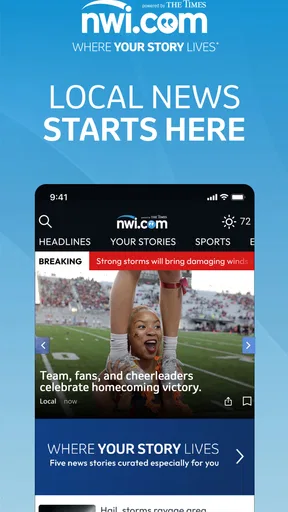
The app’s central promise is simple: it brings continually updating local news to a mobile screen. In practice, I found that this makes the most sense when used in short sessions. I might open it while having coffee, scan the latest local headlines, return later after work, and check again before deciding whether a story deserves a longer read. That rhythm suits regional news better than opening a general news app and sorting through unrelated national stories.
A realistic use case is a resident who wants to understand the day’s local developments before leaving home. Instead of searching several websites, the reader can start with one place that is built around NWI Times coverage. The benefit is not just speed. Local reporting often matters because of proximity: a community decision, a public safety update, a school-related story, or a regional event can be more relevant than a major story from another state. The app keeps that local priority visible.
I also think it can work well for people who have moved away but still care about Northwest Indiana. A local publication app gives those readers a practical way to maintain a connection without relying entirely on social posts or occasional web searches. It is also useful for relatives who want a quick sense of what is happening in the area, although the usefulness will depend on how closely the app’s coverage matches their particular interests.
The app belongs to the News & Magazines category, but I would not approach it like a digital magazine filled with long-form features alone. Its stronger role is as a regularly checked local news feed. That distinction matters because expectations shape satisfaction. If I want a quick overview of regional developments, the format makes sense. If I want deep customization across technology, world affairs, finance, and culture, a larger general-purpose news reader is likely a better fit.
The current experience and its strongest advantage
The strongest part of the product is its editorial focus. A local app does not need to compete with every national publisher to be useful. It needs to help readers find nearby stories without making them work through a large amount of irrelevant material. NWI Times has a clear reason to exist, and that clarity is more valuable than a long list of unrelated features.
Worth Reading Before You Choose

EA SPORTS FC Mobile 26 Is a Bigger Football Game, but It Takes Time

Flipboard Shows What News Apps Must Do Beyond the Feed

Switching to Android Auto Means Rethinking Your Driving Routine

Google Calendar Makes a Crowded Week Easier to Manage

Ludo King Makes the Most of the Minutes Between Plans

Baby Panda World Brings Quick Play to Modern Phones, but Its Game Library Feels Busy
I appreciate that the app is free to download and use as an entry point. That lowers the barrier for a curious reader who wants to see whether the coverage fits their routine. At the same time, in-app purchases range from $26.99 to $324.99 per item, so I would pay attention to any subscription or purchase screen before confirming anything. The free installation should not be confused with unlimited access to every possible offering inside the app.
That pricing range also creates an important trade-off. A frequent local-news reader may consider paid access worthwhile if the reporting becomes part of their daily habits. A casual visitor who checks the app only during major local events may prefer to use the free portion and decide carefully whether a purchase matches their needs. I would not subscribe automatically simply because the app is convenient; I would first establish how often I return and how much of the coverage I actually read.
The app has an average rating of 3.6 from around 667 ratings, which suggests a mixed but workable experience rather than universal approval. I read that as a reason to approach it with realistic expectations. The concept is useful, yet the mobile experience may not satisfy every reader equally. Local relevance can keep an app valuable even when the interface is not perfect, but friction becomes more noticeable when someone is already unsure about paying.
What the version history tells existing users
The current version is 9.22, and the app has been available since January 20, 2011. That long life matters because it shows this is an established product rather than a short-lived experiment. For existing readers, the current version is best understood as part of an ongoing evolution: the app has had years to remain connected to the publication’s mobile audience, while the version number indicates continued iteration.
I would still separate that evidence from assumptions about what changed in the latest release. A version number alone does not prove that a particular feature was added, that performance improved in a specific way, or that the layout was redesigned. What it does tell me is that the application remains in active product form rather than being an abandoned installation from the early smartphone era.
For someone upgrading from an older installation, the sensible approach is to open the current build and judge the parts that affect everyday reading: how quickly the latest stories appear, whether article pages are comfortable to read, how clearly purchase choices are presented, and whether returning to the app feels straightforward. Those are more useful tests than assuming a newer version automatically solves every old annoyance.
The minimum operating-system requirement is Android 8.0. That is a practical detail for anyone using an older phone. On a compatible device, the app should at least be considered alongside the phone’s available storage, screen size, and general responsiveness. On an older Android version below that requirement, it is not a suitable installation choice, so checking compatibility before planning a switch can save time.
Existing users should also remember that an update can change the feel of a familiar workflow even when the editorial purpose remains the same. Someone who has developed a habit of checking headlines in a particular order may need a little time to adjust if navigation or presentation changes. I would judge the update by whether it helps me reach local stories more directly, not merely by whether it carries a higher version number.
Small reading habits that make the app more useful
My first practical tip is to use it as a checkpoint rather than leaving it open continuously. A short visit at two or three natural points in the day is easier to sustain than trying to follow every update in real time. This also helps separate genuinely important developments from the normal flow of smaller headlines. For local coverage, that balance is useful because not every update requires immediate attention.
My second tip is to read beyond the headline when a story could affect a decision. Local headlines are excellent for orientation, but they may not provide enough context for deciding whether to change a commute, attend an event, or discuss an issue with family. I would open the full article when the subject has a direct effect on my plans, then use the headline view for general awareness.
A third trade-off is worth noting: a dedicated local app can improve relevance while reducing breadth. I would pair it with a broader news source if I needed national or international context. That is not a weakness unique to this product; it is the natural cost of specialization. The mistake would be expecting NWI Times to behave like a worldwide news aggregator when its strongest identity is regional.
Another useful habit is to decide in advance what would justify a purchase. I would use the free experience to test whether I return regularly, whether the local coverage answers questions I actually have, and whether the reading format suits me. This is especially important because the available in-app purchase range reaches from a substantial annual-style amount to a much larger item price. The right choice depends on the offer shown in the app and the reader’s commitment, so I would review the wording carefully instead of tapping through quickly.
Where the app can fall short
The biggest limitation is scope. If my daily reading is mostly national politics, global events, business analysis, or specialized subjects, this app would not be enough on its own. A general news app or a selection of publisher apps would provide wider coverage. NWI Times makes more sense when local relevance is the deciding factor, not when variety is the main goal.
The second limitation is the possibility of a mismatch between casual use and paid access. A reader may enjoy having local headlines available but still not read enough to justify a purchase. Because the app is free to install while also offering high-priced in-app items, I would treat the payment decision as a separate evaluation from the download decision. Those are two different commitments.
The rating also suggests that some users have encountered enough friction to keep the overall response from being stronger. I would not turn that number into a specific accusation about crashes, advertising, navigation, or article access, because a rating does not identify one universal cause. Instead, I would advise prospective users to test the exact workflow they care about: opening current stories, reading several articles, returning later, and checking how clearly the app explains any paid access.
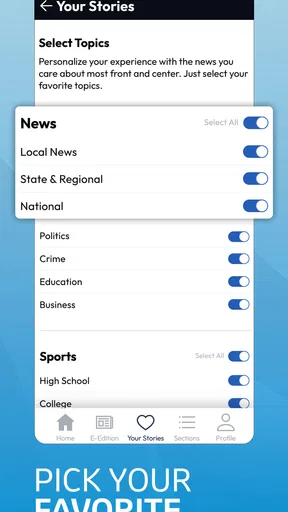
Readers who prefer a completely customizable news dashboard may find the experience too centered on one publication. In a multi-source reader, I can often arrange topics and outlets around my own priorities. Here, the benefit is a coherent local focus, but the cost is less control over the overall mix. That makes the app a poor fit for someone who wants to build a personal news command center from many sources.
There is also a difference between being informed and being notified about every development. I would not install a local news app expecting it to replace direct official information during urgent situations. For important decisions, I would use the app to discover and follow relevant reporting, then check appropriate official channels when accuracy, instructions, or timing are critical. That workflow respects the app’s role without asking it to do more than a news publication should.
Who should install it, and who should choose something else
I recommend trying NWI Times to residents of Northwest Indiana who want local coverage within easy reach and prefer a publication-centered experience over a broad aggregator. It is also worth considering for former residents, family members, and anyone whose work or daily responsibilities connect them to the region. The free starting point makes that trial relatively straightforward, while the Everyone age rating keeps it broadly accessible.
I would be more cautious if I were a light news reader who only checks headlines once every few weeks. In that case, the app may be useful during a major local story, but a paid option would require careful thought. I would also skip it as my primary news tool if my interests are mostly outside the region or if I need extensive cross-publication comparison in one screen.
For readers who already use the NWI Times website, the app’s value depends on convenience. If opening a dedicated mobile experience makes checking local stories easier than using a browser, it can earn a place in the routine. If the website already fits the reader’s habits and the app does not make reading noticeably faster or clearer, there may be little reason to maintain both. I would compare the two by daily ease, not by loyalty to one format.
For someone choosing between this app and a large news aggregator, I would frame the decision around relevance versus breadth. The aggregator wins when I want many subjects and sources at once. NWI Times wins when I want a local starting point with less noise. For someone choosing between it and another local publication app, the deciding factor should be which newsroom covers the communities and topics that matter most to that person, rather than which app has the broader category label.
What I would watch as the product continues
Because the app has a long history and is now at version 9.22, I would watch for improvements that make local reading more efficient without weakening the publication’s focus. Clearer movement from headline to article, a smooth return to the latest updates, and transparent handling of paid access would have the greatest practical effect for me. These are the areas that determine whether I keep an app in my daily rotation.
I would also watch how the product balances continuing updates with reading calm. Local news changes throughout the day, but a useful app should help me understand what is new without making every visit feel urgent. The best future direction would preserve the immediacy of regional coverage while making it easy to distinguish a genuinely developing story from a routine update.
Another point to monitor is value for different types of readers. A committed local-news subscriber and an occasional visitor do not need the same experience. Flexible, clearly explained access would help both groups make informed choices. Since the app is free to install but includes in-app purchases, clarity around what each option provides is especially important to trust.
After reviewing the app as it stands, my recommendation is conditional but genuine. NWI Times is a sensible choice when local relevance matters more than having every news topic in one place. I like its clear regional purpose, its established presence, and the convenience of checking nearby coverage in short sessions. I would combine it with a broader source for national and international news, and I would examine any purchase carefully before committing.
In the end, I would recommend installing it to a reader who can name a real reason to follow Northwest Indiana news regularly. That person is likely to notice the app’s value quickly. Someone looking for a universal news reader should choose a different tool. For the right audience, though, this is a focused and practical way to keep local reporting within reach, with the current version offering a reasonable starting point for deciding whether it belongs in a long-term reading routine.
Pros
- Covers breaking news and local events across Northwest Indiana.
- Offers convenient access to articles from a recognizable regional newsroom.
- Useful for following community issues
- schools
- sports
- and public affairs.
- Content is organized for quick browsing on a mobile device.
- Can help residents stay informed without relying on social media feeds.
Cons
- Coverage may feel limited if you live outside Northwest Indiana.
- Some articles or features may require a subscription to access fully.
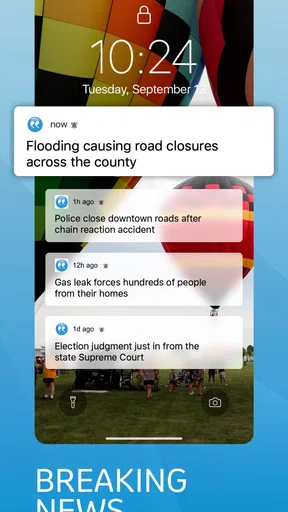
- Breaking-news notifications can become frequent or easy to overlook.
- The app’s usefulness depends on how often local stories are published.
- Advertising and promotional elements may reduce reading comfort.
FAQs for NWI Times
What is NWI Times?
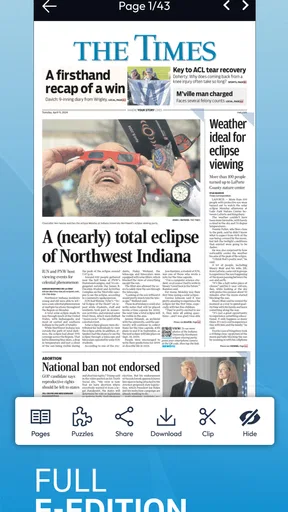
NWI Times is a news application focused on Northwest Indiana, delivering local reporting, breaking news, community updates, sports coverage, weather information, business stories, and other regional content. After installing it, readers can use the app as a convenient way to follow developments in the area without relying exclusively on a desktop browser or printed newspaper.
Is NWI Times free to download and use?
The NWI Times app can generally be downloaded at no cost, but access to all articles and premium features may depend on the publication’s subscription model. Some stories may be available to everyone, while frequent readers could encounter a subscription prompt or article limit. Check the current terms shown in the app store and inside the application before subscribing.
What kind of news and features does the app provide?
The application is designed for readers who want a broad overview of Northwest Indiana news. Depending on the current version, it may include local and regional headlines, sports, crime and public safety reports, politics, business, entertainment, opinion content, photo galleries, alerts, and weather-related updates. Available sections and tools can change with future updates.
Does NWI Times require an account or subscription?
You may be able to browse some content without creating an account, but registration can be required for personalized features, saved articles, newsletters, commenting, or managing a digital subscription. Full access may also require a paid plan, particularly when reading subscriber-only stories. Review the sign-in and subscription screens carefully so you understand billing, renewal, and cancellation conditions.
Is NWI Times available for both Android and iPhone?
NWI Times is intended for mobile readers and may be available through the official Google Play Store for Android devices and Apple’s App Store for iPhone or iPad, depending on regional availability and the publisher’s current support. Before downloading, confirm the developer name, supported operating-system version, permissions, and recent update history to avoid installing an unofficial or outdated application.


